West Coast Fishing: Where and How to Fish It
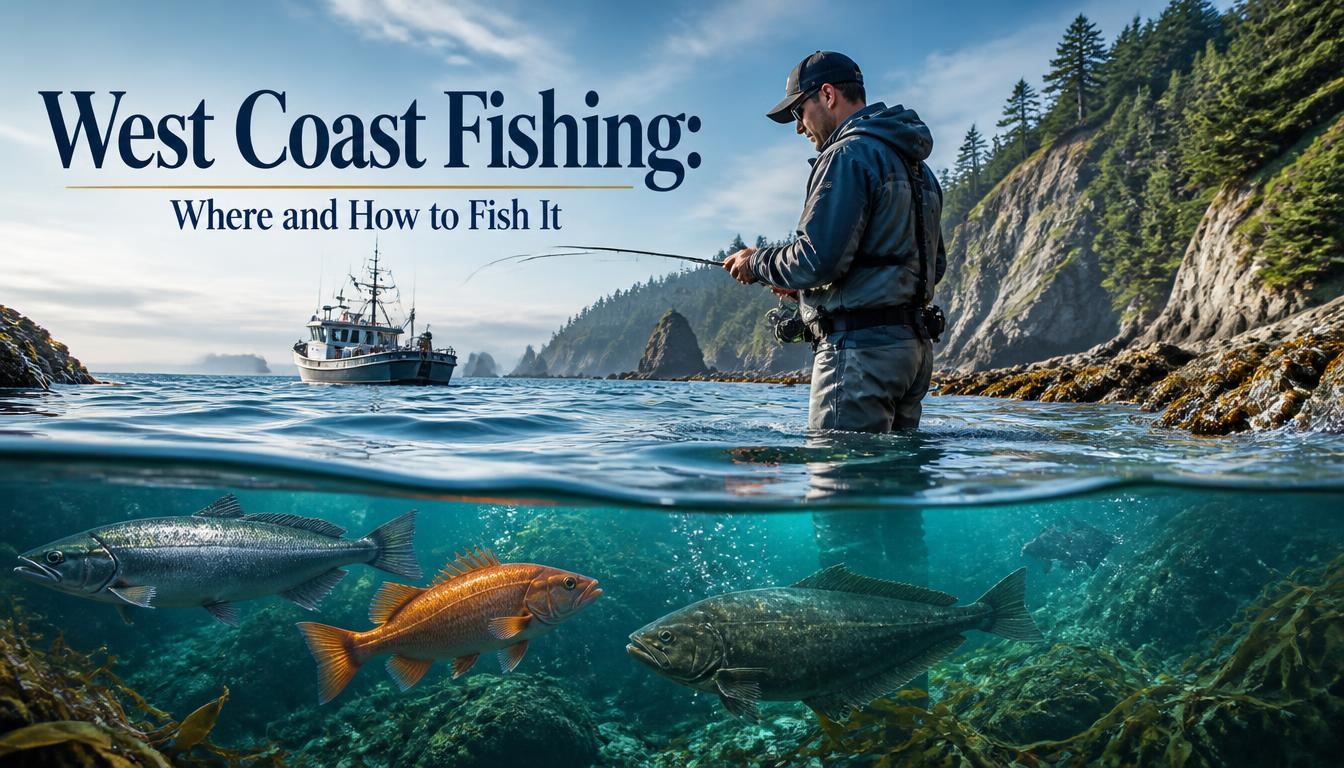
The U.S. West Coast Washington, Oregon, and California hosts one of the most varied fisheries in North America, spanning salmon runs, deepwater rockfish, halibut grounds, and some of the world's most productive crab and shellfish beds. West coast fishing also just had one of its more dramatic recent chapters: California's salmon season, closed for three consecutive years due to record low returns, reopened in 2026 as key populations rebounded. This guide covers the species, the top fishing regions, and what's actually changed heading into this year.
What Counts as "West Coast Fishing"?
"West Coast fishing" generally refers to the marine and estuarine fisheries along Washington, Oregon, and California's Pacific coastline, managed under a shared federal framework through the Pacific Fishery Management Council and NOAA Fisheries, alongside state level regulations that vary meaningfully by location. It spans everything from offshore salmon trolling and deepwater rockfish charters to inshore bay fishing for striped bass and shore based surfperch fishing a genuinely wide range of styles within a relatively compact stretch of coastline.
Key Species You'll Find Along the West Coast
Salmon
Chinook (king) and coho salmon anchor much of the West Coast's recreational and commercial fishing identity, with fish returning from the ocean to spawn in major river systems like the Sacramento, Klamath, and Columbia. Salmon populations here are closely tied to freshwater conditions drought years upstream translate directly into poor ocean returns, which is exactly what drove several recent years of closures.
Rockfish & Lingcod
Dozens of rockfish species inhabit West Coast waters, from shallow nearshore species like black rockfish to deepwater species like yelloweye rockfish, which was declared rebuilt on most of the West Coast in October 2025 after more than two decades under a strict rebuilding plan. Lingcod, a large, toothy predator often caught alongside rockfish, is another staple of West Coast bottom fishing.
Halibut
Pacific halibut supports a well managed recreational fishery along the West Coast, with specific season dates and quotas set annually and enforced by subarea. California's 2026 recreational halibut season, for example, opened April 1 with region specific closing dates and a set poundage quota for the state.
Dungeness Crab & Other Shellfish
Dungeness crab is one of the West Coast's most iconic fisheries, supporting both major commercial operations and widely popular recreational crabbing from piers, boats, and even some beaches, depending on location and season.
Top West Coast Fishing Destinations
Washington: Puget Sound
Puget Sound offers a genuinely varied mix within a single, relatively sheltered body of water salmon, lingcod, several rockfish species, and excellent Dungeness crabbing, all accessible from both boat and shore in many areas.
Oregon: Newport & Astoria
Astoria, sitting at the mouth of the Columbia River, is one of the West Coast's premier salmon fishing hubs, with both the ocean salmon fishery and a strong inland fishery on the Columbia itself. Newport, further south on the Oregon coast, offers strong offshore rockfish, lingcod, and tuna fishing during the warmer months.
California: San Francisco Bay, Monterey & Southern California
San Francisco Bay and its Delta support a notable striped bass fishery alongside salmon runs tied to the Sacramento and San Joaquin river systems. Monterey Bay combines strong rockfish and lingcod bottom fishing with seasonal salmon runs. Further south, San Diego and the Channel Islands open up an entirely different style of fishing centered on yellowtail and tuna species like bluefin and yellowfin, particularly as warmer offshore water pushes north during summer and fall.
The 2026 Salmon Season: A Recovery Story
West coast fishing's biggest recent story is genuinely a comeback. California's ocean salmon season had been closed for three consecutive years due to near record low Chinook returns, driven largely by drought conditions affecting freshwater spawning habitat. Significant improvements in key populations particularly Sacramento River fall run Chinook and Klamath River fall run Chinook allowed both commercial and recreational salmon fishing to reopen along California's coast in 2026, though with regional variation: the stretch from the Oregon border to Point Arena remained closed to commercial fishing even as other areas reopened, reflecting how localized and closely monitored these recovery decisions remain.
Rockfish Regulations & the Deepwater Release Requirement
Rockfish regulations along the West Coast vary by species and depth, and anglers targeting bottom fish need to understand barotrauma the rapid pressure change a fish experiences when reeled up from deep water, which can prevent it from swimming back down if simply released at the surface. Many areas require a deepwater release device (sometimes called a descending device) for rockfish species that must be released, since releasing an affected fish at the surface without one is likely to kill it even though it may initially swim away. Species specific rules shift periodically as stock assessments update, including the yelloweye rockfish rebuilding announced in October 2025, so checking current regulations for your specific area before heading out remains essential.
Best Time of Year to Fish the West Coast
Timing varies significantly by species and region. Salmon fishing generally peaks from late spring through fall, tracking both ocean salmon seasons and the fall spawning runs into rivers like the Sacramento, Klamath, and Columbia. Rockfish and lingcod fishing runs largely year round in most areas, weather and sea conditions permitting, since these species don't migrate the way salmon do. Halibut season typically opens in spring, with specific dates and quotas set annually by subarea. Dungeness crab season timing depends heavily on state specific openers and, increasingly, domoic acid testing results, which can delay openers in years when harmful algal blooms affect crab safety.
FAQ
What states make up "West Coast fishing" in the U.S.?
Washington, Oregon, and California, managed jointly through the Pacific Fishery Management Council and NOAA Fisheries, alongside individual state regulations.
Is California salmon fishing open in 2026?
Yes. After three consecutive years of closure due to near record low Chinook returns, California's ocean salmon season reopened in 2026 following significant improvements in key populations, though some northern areas remained closed to commercial fishing.
What's the best West Coast destination for rockfish?
Monterey Bay and much of the Oregon and Washington coast offer strong rockfish and lingcod bottom fishing largely year round, since these species don't migrate seasonally the way salmon do.
Do I need special gear to release rockfish on the West Coast?
In many areas, yes a deepwater release device (descending device) is required for certain rockfish species, since releasing a fish affected by barotrauma at the surface without one is likely to kill it.
Where can I catch tuna on the West Coast?
Southern California, particularly around San Diego and the Channel Islands, offers strong seasonal tuna fishing (bluefin and yellowfin), especially as warmer offshore water moves north during summer and fall.
What caused the recent California salmon fishing closures?
Drought conditions affecting freshwater spawning habitat drove Chinook salmon returns to near record lows, leading to three consecutive years of closure before key populations recovered enough to reopen the season in 2026.
Is Dungeness crab season the same every year?
No. Timing varies by state and can be delayed by domoic acid testing results, since harmful algal blooms can make crab unsafe to eat in certain years and locations.
Conclusion
West coast fishing covers an unusually wide range within one relatively compact stretch of coastline salmon runs tied directly to freshwater drought conditions, deepwater rockfish now rebuilding after decades of strict management, and warm water tuna fishing in Southern California that feels almost like a different fishery entirely. The 2026 salmon season reopening after three closed years is a reminder of how closely tied these fisheries remain to environmental conditions well beyond the ocean itself. For more on the rockfish species covered here, see our full Yelloweye Rockfish guide or our Alaska Rockfish species guide.